Why Patio Edges Sink and Separate and How Proper Base Preparation Prevents It
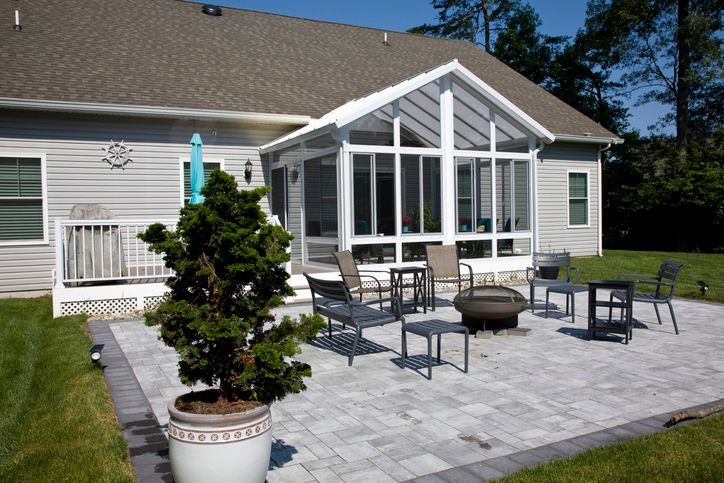
A paver patio may look level and secure when it's first installed, but problems can develop if the ground and underlying materials aren't properly prepared. Over time, homeowners may notice pavers sinking along the edges, gaps forming between stones, or sections of the patio becoming uneven.
These problems often have more to do with the patio's foundation than the pavers themselves.
For Pittsburgh-area homeowners, soil conditions, temperature swings, rainfall, and seasonal freezing and thawing can affect patio performance. Proper excavation, base preparation, compaction, drainage, and edge restraint help reduce the risk of settling and movement.
Understanding how these components work together helps homeowners spot potential problems with an existing patio or make informed decisions when planning a new installation.
Why Do Paver Patio Edges Sink?
Paver patio edges commonly sink because the soil or aggregate beneath them settles, loses support, or shifts over time. In some cases, poor drainage or inadequate edge restraint contributes to the problem.
Patio edges can be particularly vulnerable because they border surrounding soil, grass, or landscaping rather than being supported by pavers on every side.
Several conditions can contribute to sinking or separating patio edges:
- Insufficient excavation: If unsuitable soil or organic material remains beneath the patio, it can settle or decompose, creating uneven support.
- Poorly compacted base material: Loose aggregate may compress under use and changing ground conditions.
- Inadequate base coverage: If the compacted base doesn't extend far enough beyond the pavers, the edges may lack sufficient support.
- Drainage problems: Water moving through or around the base can weaken supporting soil or carry away bedding material.
- Missing or damaged edge restraints: Without proper lateral support, pavers can shift outward and develop wider joints.
These issues don't always appear immediately. A patio may remain level for a period before signs of movement become noticeable.
When several pavers begin sinking in the same area, the problem may extend below the visible surface. Simply adding sand and resetting the pavers may not provide a lasting correction if the underlying base remains unstable.
The Importance of a Proper Paver Base
A paver patio depends on more than the stones you see on the surface. The materials underneath must support the pavers, distribute weight, and provide a stable foundation through changing weather conditions.
Proper paver patio base preparation begins with excavation and continues through soil assessment, aggregate installation, grading, and compaction. Each step affects the finished patio's stability.
Excavation Creates Room for a Stable Foundation
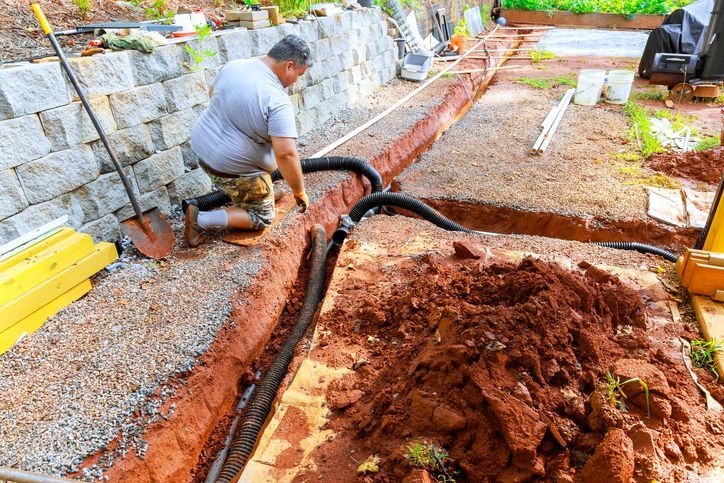
Before installing a patio, excavate the area to accommodate the base materials, bedding layer, and pavers.
Excavation also lets you remove vegetation, roots, topsoil, and other unsuitable materials that may settle or break down over time.
Required excavation depth depends on soil conditions, patio use, material specifications, and the installation method. No single excavation depth is appropriate for every property.
On Pittsburgh-area properties, changes in yard elevation and varying soil conditions can make preparation especially important. A patio built on a slope or near areas with recurring drainage problems may require additional planning.
For a closer look at how site preparation affects outdoor projects, read our article on proper landscaping excavation.
Aggregate Base Preparation Supports the Pavers
After excavation, we install suitable aggregate to create the patio's structural base.
For many conventional residential paver installations, this involves a compacted crushed-stone aggregate base beneath a relatively thin bedding layer. Other engineered paver systems may use different aggregate arrangements.
The aggregate supports the system and helps distribute loads across the prepared ground. The base must also extend beyond the outside edges of the patio to provide adequate support for the perimeter and edge restraints.
When the base is too shallow, poorly graded, or unsupported at the edges, the patio becomes more vulnerable to uneven settling. A properly prepared base is one of the main reasons two patios built with similar-looking pavers may perform differently over time.
How Compaction Affects Patio Stability
Compaction mechanically consolidates soil or aggregate by reducing empty spaces between particles and improving stability.
If the soil or aggregate beneath a patio isn't adequately compacted, it may continue settling after installation. This can create low spots, uneven joints, and sinking pavers.
Compaction should begin with the prepared ground beneath the patio. Install and compact the aggregate base in appropriate layers using equipment suited to the materials and site conditions.
Adding a thick layer of stone and compacting only the surface may leave loose material underneath. As that material settles, the pavers above it can move.
Proper compaction is especially important along patio edges, where inadequate support can let the outside pavers settle before the center of the patio shows any visible movement.
The goal is to create a stable, consistent base across the entire patio, including the perimeter.
Why Drainage Matters Around a Paver Patio
Water is another important factor in patio performance. Rainwater, runoff from nearby surfaces, and moisture moving through the soil can all affect the materials supporting a patio.
Proper patio drainage helps prevent water from collecting, which can soften supporting soil, contribute to erosion, or affect the base's stability.
A patio should be designed so surface water drains toward an appropriate outlet rather than collecting in low areas or flowing toward the home's foundation.
Drainage planning may involve the patio's slope, surrounding yard grading, soil conditions, and the need for additional drainage measures.
For example, a patio installed below a sloped lawn may receive runoff from the surrounding yard. Without an appropriate drainage plan, repeated water flow can affect the supporting ground or wash away material at vulnerable edges.
How Freezing and Thawing Affect Pittsburgh Patios
Pittsburgh's seasonal temperature changes add another factor.
When ground moisture freezes, it can move the soil. As temperatures rise and the ground thaws, conditions beneath the patio may change again.
This process can cause uneven movement, especially where moisture collects or the supporting materials aren't properly prepared.
A well-constructed aggregate base, suitable drainage, and adequate compaction help reduce the risk of moisture-related movement. However, no installation method can eliminate every effect of changing ground and weather conditions.
For homeowners planning a new patio, it's worth discussing how the contractor will manage both surface runoff and water beneath the pavers.
What Role Does Edge Restraint Play?
Even with a properly prepared base, the pavers at the edge need support to keep the installation together.
Edge restraints help prevent pavers from spreading outward and keep the joints and laying pattern in place. They provide lateral support around a patio's perimeter.
Depending on the installation, suitable restraints may include manufactured paver edging, concrete restraints, or other properly designed perimeter systems.
The restraint must suit the paver system and be securely installed on a stable foundation.
Without adequate edge restraint, the outer pavers can gradually move away from the rest of the patio. This may cause visible gaps, loose border stones, or changes in the original laying pattern.
Edge restraint and base preparation must work together. Even a properly installed restraint may not perform as intended if the underlying aggregate shifts or doesn't extend far enough beyond the patio perimeter.
It's also important to distinguish between sinking and spreading. A patio edge that has dropped below the surrounding surface may indicate settlement beneath the pavers. An edge that is moving outward may point to a restraint problem. Some patios experience both conditions at once.
Identifying the type of movement helps determine what needs correcting.
Can a Sinking Paver Patio Be Repaired Without Rebuilding It?
Not every uneven patio requires complete replacement. The appropriate repair depends on what is causing the pavers to move and how much of the installation is affected.
If the issue is limited to a small area and the underlying base remains stable, it may be possible to lift the affected pavers, correct the bedding layer, and reinstall them.
If the aggregate base has settled, eroded, or lost support, you may need a more involved repair. That can include removing the affected pavers, correcting the base, compacting the replacement material, and reinstalling the surface.
A failed edge restraint may also need replacement or resecuring.
Homeowners should pay particular attention to recurring movement. If the same section continues sinking after repairs, the underlying problem may not have been addressed.
A contractor should evaluate the site conditions before recommending whether a localized repair or more extensive reconstruction makes sense.
Building a Paver Patio for Long-Term Performance
A patio should be planned from the ground up, not just around the appearance of the finished pavers.
The size, layout, and materials matter, but so do the conditions beneath the surface. Proper construction involves evaluating the existing ground, removing unsuitable material, preparing and compacting the aggregate base, planning drainage, and securing the perimeter.
When comparing patio contractors, homeowners should ask how they'll handle these steps.
Questions worth discussing include:
- How will the appropriate excavation depth be determined?
- What aggregate materials will be used for the base?
- How will the ground and base layers be compacted?
- Will the base extend beyond the patio edges?
- How will surface water and surrounding yard drainage be managed?
- What type of edge restraint will be installed?
Clear answers can help homeowners better understand the installation process and compare the work included in different proposals.
Paver patios are one part of a larger outdoor design. When properly planned, hardscaped areas can provide usable space while working with the surrounding landscape. Learn more about the benefits of hardscaping and how these features fit into residential properties.
Plan Your Patio Project With J Bird's Landscaping
Sinking or separating pavers are often signs that something beneath or around the patio needs attention. Understanding the condition of the base, drainage, and edge restraints is key to determining the right next step.
If you're planning a new paver patio in the Pittsburgh area, J Bird's Landscaping can help you discuss your project and the site preparation it may require.
Contact J Bird's Landscaping to get started.
Author: Jay Nagy
Owner & Founded of J Bird's Landscaping. 18+ Years of experience in Pittsburgh lawn cutting, patio installation, trucking/hauling, French drain installation, and other landscape/design services.
More Posts from J Bird's Landscaping