Retaining Wall Failures: What Causes Most Problems and How Pros Prevent Them

Retaining walls play an important role on many Pittsburgh properties. They hold back soil, manage slopes, and help control drainage. When built correctly, they can last for decades. When built poorly, they can begin to lean, crack, or fail much sooner than expected.


Many homeowners assume retaining wall damage is simply a matter of age. In reality, most retaining wall repair projects stem from preventable issues such as poor drainage, inadequate base preparation, or improper excavation.

 Understanding what causes these problems can help you make informed decisions and avoid costly repairs in the future.


Why Retaining Wall Failures Are More Common Than Homeowners Realize


Retaining walls are often treated as decorative landscape features. While they can enhance curb appeal, their primary function is structural. They resist soil pressure and redirect water on sloped properties.


In the Pittsburgh region, retaining walls face additional challenges. Heavy rainfall, clay-rich soils, and repeated freeze-thaw cycles all put pressure on walls throughout the year. Water that becomes trapped behind a wall expands when it freezes, adding stress to the structure. Over time, even small installation mistakes can become significant problems.


When a wall is designed and installed without considering local soil and drainage conditions, failure becomes much more likely.


Common Causes of Retaining Wall Failure


Most retaining wall drainage problems and structural issues can be traced back to a few core installation mistakes.


Poor Drainage Behind the Wall


One of the most common causes of retaining wall repair is water buildup behind the structure. Soil naturally retains moisture. Without proper drainage, water collects and creates hydrostatic pressure, which pushes against the wall.


Common drainage mistakes include:


  • No gravel backfill behind the wall
  • Missing or improperly installed drainage pipes
  • Blocked weep holes
  • Using dense native soil that traps water


In Pittsburgh's climate, trapped water also increases the risk of freeze-thaw damage. As water expands during freezing, it exerts additional pressure on the wall.


If you are dealing with broader yard drainage issues, improving overall water management can make a significant difference. 


Inadequate Footing or Base Preparation


Every retaining wall depends on a stable foundation. If the base is not prepared correctly, the wall may settle unevenly or begin to lean.


Common base preparation mistakes include:


  • Skipping proper compaction
  • Using insufficient gravel base material
  • Setting the footing too shallow
  • Failing to account for frost depth


In Western Pennsylvania, frost depth matters. A base that is too shallow can shift as the ground freezes and thaws. Once movement begins, cracks and leaning often follow.


A properly compacted gravel base distributes weight evenly and reduces the risk of movement over time.


Improper Excavation and Backfilling


Excavation is a critical step that many homeowners underestimate. Digging too much or too little can affect stability. Using the wrong backfill material can also create long-term problems.


Common excavation and backfilling issues include:


  • Overcutting the slope, which weakens the surrounding soil
  • Undercutting, which limits proper base depth
  • Backfilling with native clay soil instead of clean stone
  • Failing to compact soil in layers


Improper excavation often leads to settlement behind the wall. As soil shifts, it creates gaps and pressure points that compromise the structure.


If you are considering handling excavation work yourself, it is crucial to understand the risks. 


Walls Built Too Tall Without Proper Planning


Height significantly increases soil pressure. A wall that may perform well at three feet can behave very differently at five or six feet.


When walls are built taller without adjusting the base depth, reinforcement, or drainage design, the added weight of soil can cause them to bow or lean. In some cases, taller walls require additional reinforcement methods or professional design considerations based on site conditions.


Each property is unique. Slope angle, soil composition, and water patterns all influence what type of wall is appropriate.


Warning Signs Your Retaining Wall May Be Failing


Early detection can reduce the cost and scope of retaining wall repair. 

Homeowners should watch for:


  • A leaning or bulging wall face
  • Horizontal cracks or separation between blocks
  • Gaps forming between the wall and the surrounding soil
  • Water pooling near the base
  • Soil washing out from behind the wall


A leaning retaining wall repair situation often indicates drainage or base issues. Small shifts can sometimes be corrected. Larger movements may require partial or full rebuilds.


If you notice any of these signs, a professional evaluation can help determine whether the wall can be repaired or needs to be replaced.


How Professionals Prevent Retaining Wall Failures


Preventing failure starts well before construction begins. Experienced contractors focus on site-specific planning, drainage design, and proper installation methods.


Site-Specific Planning and Evaluation


No two yards are identical. A professional evaluation includes:

Assessing soil type and compaction characteristics

Evaluating slope grade and stability

Identifying natural drainage paths

Determining load requirements based on height and location

Understanding how water moves across and through your property helps shape the wall design.


Proper Drainage Design


Drainage is one of the most essential elements of long-term performance. A properly built retaining wall typically includes:


  • Clean gravel backfill behind the wall
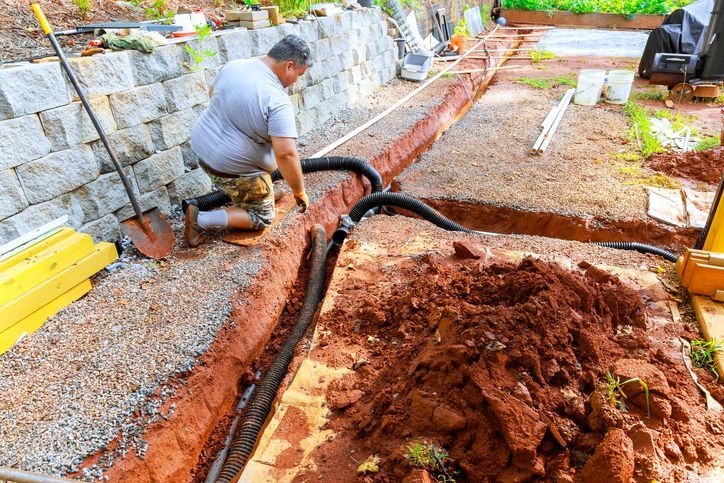
  • A perforated drainage pipe at the base
  • Fabric to separate soil from drainage stone
  • Grading that directs surface water away


Addressing both surface and subsurface water reduces hydrostatic pressure and improves durability.


Correct Base and Footing Installation


A strong foundation supports the entire structure. Professionals pay close attention to:


  • Excavation depth
  • Compacted gravel base thickness
  • Leveling accuracy
  • Local frost considerations


Compaction standards and depth requirements vary depending on soil and climate. Proper preparation at this stage prevents movement that can lead to future retaining wall repair.


Why Retaining Wall Repairs and Rebuilds Should Not Be DIY


Many homeowners are comfortable with landscaping projects, but structural retaining wall repair involves more risk than it may appear.


Potential concerns include:


  • Injury during demolition or heavy lifting
  • Additional structural damage may occur if the underlying issues are not addressed
  • Temporary fixes that fail again within a few seasons
  • Drainage mistakes that worsen water problems


A leaning wall is often a symptom of deeper base or drainage issues. Simply resetting blocks without correcting those underlying problems rarely produces lasting results.


Professional evaluation helps identify the true cause of failure and determine whether repair or replacement is the most practical solution.


How J Bird's Landscaping Helps Homeowners Avoid Costly Wall Failures


At J Bird's Landscaping, retaining walls are approached as structural systems, not just landscape features. Each project begins with an evaluation of soil conditions, drainage patterns, and slope requirements.


Homeowners in the Pittsburgh area often face challenging terrain and moisture. Our team focuses on:


  • Thorough site preparation
  • Proper excavation and base compaction
  • Effective drainage integration
  • Durable materials suited to local conditions


When addressing retaining wall repair, we assess whether the existing structure can be stabilized or whether rebuilding offers a more reliable long-term solution. Recommendations are based on the property's requirements, not a one-size-fits-all approach.


If you have noticed cracking, leaning, or drainage concerns, a professional evaluation can provide clarity. Small issues addressed early are often more manageable than waiting until structural failure occurs.


Schedule a Retaining Wall Evaluation with J Bird's Landscaping


If you are concerned about drainage problems in retaining walls, visible movement, or aging structures on your property, J Bird's Landscaping can help.


Request a professional retaining wall evaluation to determine the condition of your wall and discuss repair or replacement options. Our team will review your site conditions and provide clear, practical recommendations based on experience in the Pittsburgh region.


Protecting your landscape starts with proper planning and installation. When retaining walls are built with the right foundation and drainage, they can perform reliably for many years.

A man and a child are sitting in a vehicle that says ' ec ' on it

Author: Jay Nagy


Owner & Founded of J Bird's Landscaping. 18+ Years of experience in Pittsburgh lawn cutting, patio installation, trucking/hauling, French drain installation, and other landscape/design services.


More Posts from J Bird's Landscaping
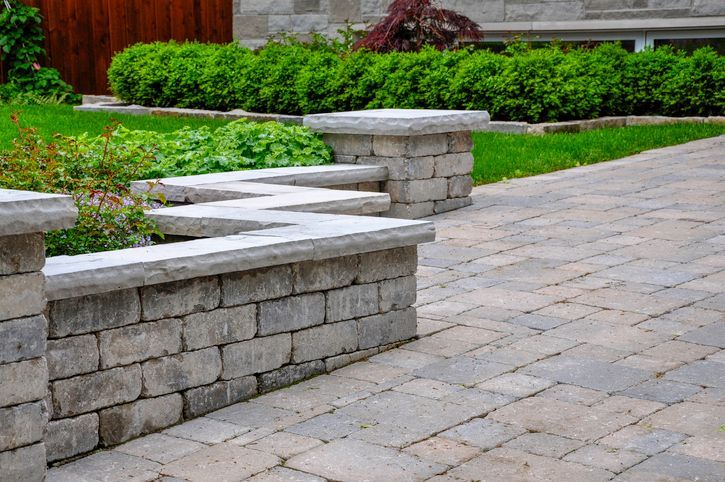
How Retaining Walls Help Control Erosion on Steep Yards
By Rocket Websitez January 27, 2026
Learn how retaining walls prevent erosion on steep yards by stabilizing soil and managing runoff. Trusted Pittsburgh retaining wall solutions for sloped properties.
French Drains and Beyond: Choosing the Right Water Management System for Your Property
By Rocket Websitez December 23, 2025
Explore how to choose the right water management system for your property - from French drains and surface drains to grading solutions - to prevent erosion and standing water issues.
Why Water Pooling in Your Yard Isn't Just Annoying - It's a Risk to Your Home
By Rocket Websitez November 25, 2025
Discover why standing water in your yard can lead to foundation damage, erosion, pest issues, and reduced property value. Learn more here to protect your yard!
How Integrated Hardscaping and Drainage Systems Improve Property Value and Prevent Damage
By Rocket Websitez August 27, 2025
Integrated hardscaping and drainage protect your home, prevent costly water damage, and add lasting value to your property. Learn how to plan smart upgrades.
July 9, 2025
Managing stormwater effectively is crucial for maintaining a property that is safe, stable, and compliant with local environmental regulations. Whether you're a homeowner experiencing pooling water in your backyard or a developer planning large-scale drainage infrastructure, water retention systems offer the perfect solution. But before the system can do its job, there's one crucial phase that determines its success: excavation. This blog explores how professional excavation services in South Hills play a vital role in designing and installing effective water retention systems. We'll explain these systems, why they matter, and how excavation ensures they function efficiently from day one. What Is a Water Retention System, and Why Is It Needed? Water retention systems are designed to collect, hold, and slowly release stormwater. They serve two primary purposes: Flood Prevention — Retention systems protect buildings, landscapes, and roadways from flooding by controlling where and how water flows. Erosion Control and Soil Protection – Proper drainage prevents water from washing away topsoil, weakening foundations, or damaging plants. Water retention is critical in the South Hills region due to hilly terrain, older infrastructure, and heavy seasonal rainfall. Without proper drainage, properties can face water damage, basement flooding, and runoff that contributes to pollution downstream. Common Types of Water Retention Systems There are several types of retention systems, each requiring different levels of excavation and drainage planning: Retention ponds: Open basins designed to hold large volumes of water. Detention basins: Temporarily hold water before releasing it at a controlled rate. Dry wells: Underground chambers that collect and slowly disperse water. French drains: Gravel-filled trenches that help redirect water away from structures. Subsurface tank systems: Modular units buried underground to capture and manage runoff. Each of these systems begins with excavation, shaping the landscape to support the size, volume, and location of the drainage structure. Excavation: The Backbone of Every Drainage Project Excavation is a precise process that lays a strong foundation for an effective and reliable water retention system. Whether you're installing a dry well in your backyard or planning a large-scale basin for your commercial site, proper excavation helps you make sure that the system performs safely and efficiently. Here's why excavation is the first step in any water retention system installation: 1. Soil Testing and Assessment To begin the excavation process, contractors will conduct a detailed soil evaluation. Different soil types absorb and drain water differently. For example, sandy soils will allow water to percolate quickly, while clay soils, common in many South Hills neighborhoods, tend to retain water, increasing the risk of surface flooding. Soil testing helps determine the following: How deep to excavate What type of backfill or gravel may be needed Whether soil amendments or drainage fabrics are required Local experience plays a significant role here. A qualified excavation service in South Hills will understand the unique geotechnical conditions in areas like Mt. Lebanon, Bethel Park, and Baldwin. 2. Customized Grading and Land Shaping Grading refers to the process of sloping and contouring the land so that water flows in the desired direction. On sloped properties, precise grading is essential to avoid water collecting near foundations or running into neighboring lots. Excavation crews use GPS-enabled equipment and laser levels to: Establish positive drainage away from buildings. Create uniform slopes for channels or swales. Ensure retention basins have the correct depth and volume. Grading isn't just about utility; it's also about appearance. A well-graded retention area can blend into your landscape, doubling as a garden bed or natural-looking water feature. 3. Digging for Tanks, Basins, and Pipes Once grading is completed, excavation will begin for the drainage components. Depending on the system, this may involve: Digging deep pits for dry wells or water tanks Creating trenches for underground piping Shaping shallow depressions for surface retention basins Building reinforced walls for concrete or block containment systems This is where expertise and equipment matter most. The depth and width must meet strict guidelines for capacity, safety, and durability. Excavation crews also need to account for potential underground utilities, bedrock, or other unexpected obstacles. What to Expect from a Professional Excavation Service in South Hills Choosing an experienced excavation contractor helps you to ensure that your drainage project is completed on time, within your budget, and in compliance with local codes. A professional excavation service in South Hills will guide you through the following steps: Step 1: Initial Consultation and Planning The process starts with an on-site evaluation. The contractor will walk the property, assess slopes and soil, and help determine which retention system fits your needs. They'll also identify any permitting requirements based on municipal or county regulations. Step 2: Utility Marking and Site Preparation Before digging can start, all underground utilities, gas lines, water lines, and electrical cables must be marked. The excavation team will then clear the site, removing vegetation, old concrete, or debris. Step 3: Excavation and Installation Using backhoes, mini-excavators, or trenchers, the crew will shape the area. They will measure depths, apply gravel layers or liners, and install components like: Retention tanks Drainage pipes Filter fabrics Perforated basins Step 4: Backfilling and Restoration After installation is complete, the excavated area is backfilled with gravel, soil, or sand, depending on the project. The team then regrades the surface and may plant grass or install sod to blend the area into your existing landscape. Step 5: Final Inspection and Maintenance Plan Once the system is complete, your contractor will inspect it for performance and provide guidelines for seasonal maintenance. This may include: Removing debris from inlets or outlets Checking for erosion or settlement Inspecting overflow channels during heavy rain Excavation Challenges Specific to the South Hills Region If your property is located in the South Hills, you may have to deal with a few region-specific excavation concerns, such as: 1. Steep Slopes and Elevation Changes Many neighborhoods, like Upper St. Clair and Pleasant Hills, have sloped yards and driveways. Excavation in these areas requires slope stabilization and may include installing retaining walls or erosion control blankets. 2. Older Infrastructure and Tight Lots South Hills includes a mix of newer developments and older homes. Excavators often need to work around aging sewer systems, narrow access points, or tight property lines. 3. Municipal Stormwater Regulations Several South Hills municipalities have adopted stormwater ordinances that regulate the amount of water that can be released into public drains. Excavation contractors must ensure that systems are correctly sized and permitted. Benefits of Working with a Local Excavation Team Stormwater management is not a one-size-fits-all task. Working with a local excavation service in South Hills brings many benefits, including: Familiarity with local permitting offices and building codes Knowledge of soil patterns and drainage behavior across neighborhoods Faster response times for inspections and project coordination Established relationships with local engineers and landscape architects At J Bird's Landscaping, we combine local insight with professional-grade excavation capabilities to deliver reliable water retention solutions. Integrating Excavation and Landscaping for Seamless Results Excavation isn't just about digging; it's part of a bigger picture. After your retention system is installed, our landscaping team can restore the area with plants, mulch, pavers, or even decorative stone to match your property's aesthetics. Some of our most popular post-excavation upgrades include: Rain gardens that add beauty and pollinator support Permeable walkways to reduce runoff Decorative swales or bioswales with native grasses Low-maintenance groundcovers for erosion-prone slopes By choosing a company that handles both excavation and landscape design, you can be confident that your drainage solution will not only work but also look great. Water Retention Systems for Better Drainage Stormwater retention systems are critical for protecting your home, landscape, and local environment. However, the success of any system depends heavily on the quality of excavation that supports it. From soil testing and grading to trenching and system integration, excavation is the engine that drives performance. If you're considering a new water retention system or upgrading outdated drainage on your property, partnering with an experienced excavation service in South Hills is the smartest first step. Get in Touch with J Bird's Landscaping Today! Ready to take control of your property's water management? J Bird's Landscaping offers complete support for water retention system installation, including professional excavation, drainage planning, and finishing touches. We proudly serve homeowners, contractors, and property managers throughout the South Hills area. Contact us today to schedule your consultation or request an on-site evaluation.
The Ultimate Guide to Excavation Services
By Rocket Websitez April 14, 2025
Dig into excavation with J Bird’s expert guide—covering costs, timelines, and safety tips to help you plan your project with confidence and peace of mind.
The Importance of Professional Excavation
February 10, 2025
Ensure a strong foundation for your new home! J Bird's Landscaping explains the importance of professional excavation for safety, stability, and longevity.
Redi-Rock vs. Versa-Lok Retaining Wall Installation
January 22, 2025
Redi-Rock or Versa-Lok? J Bird's Landscaping compares these top retaining wall systems to help you decide the best fit for your landscaping needs.
Retaining Walls and Property Value
December 6, 2024
Discover how retaining walls can enhance your property’s value and curb appeal. J Bird’s shares insights on functionality, design, and investment benefits!
Protecting Your Retaining Wall in Winter Weather
November 1, 2024
Keep your retaining wall strong through winter! Get J Bird’s expert tips on preventing cold-weather damage and ensuring long-lasting durability.