How Reinforcement Helps Retaining Walls Last Longer
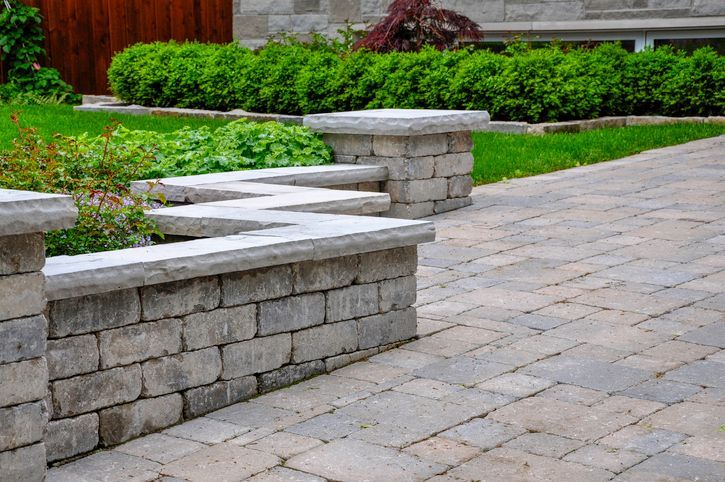
A retaining wall may look simple from the outside, but much of what determines its long-term performance is hidden behind the finished wall. Proper excavation, base preparation, drainage, backfill, and reinforcement all work together to create a retaining wall capable of handling the conditions of the property.
For certain retaining wall projects, geogrid reinforcement is an important part of that system. Geogrid extends into the soil behind the wall and helps the wall and surrounding soil function together as a more stable mass.
This becomes particularly important when dealing with taller walls, steep Pittsburgh-area properties, challenging soil conditions, or additional loads above a retaining wall.
Understanding what geogrid does—and why retaining wall reinforcement can't be treated as an afterthought—can help homeowners recognize the difference between a wall that simply looks finished and one designed with long-term performance in mind.
What Is Geogrid in a Retaining Wall?
Geogrid is a reinforcement material installed in layers within the compacted soil behind certain retaining walls. Rather than relying only on the weight and strength of the wall itself, geogrid helps connect the wall system to a larger reinforced section of soil.
Think of it as extending the retaining wall's support farther into the slope.
During construction, sections of geogrid are typically placed between specified courses of retaining wall block and extended horizontally into the properly prepared backfill. Additional soil or aggregate is then installed and compacted above the reinforcement as construction progresses.
Once complete, the geogrid is hidden underground. Homeowners won't see it when looking at the finished wall, but it can play an important role in the wall system.
Why Do Some Retaining Walls Need Reinforcement?
Retaining walls are constantly dealing with forces from the soil they hold back. As wall height and site complexity increase, those forces become more significant.
Several conditions can affect reinforcement requirements, including:
- Retaining wall height
- Slope above or below the wall
- Soil characteristics
- Drainage conditions
- Loads near the top of the wall
- Wall location and configuration
- Site-specific construction requirements
A small landscape wall and a tall retaining wall supporting a steep grade are very different projects.
This is one reason retaining wall construction should begin with an evaluation of the property rather than simply choosing a block and deciding where the wall should go.
If you're still determining whether your property requires a wall, our guide on <a href="https://www.jbirdslandscapingllc.com/blog/when-should-you-build-a-retaining-wall">When Should You Build a Retaining Wall?</a> covers several common situations where retaining walls can help address slopes, erosion, and landscape challenges.
How Geogrid Helps Reinforce a Retaining Wall
The purpose of geogrid is not simply to make a retaining wall "stronger." Its role is to help create a reinforced soil mass behind the wall that can better resist the forces acting on the system.
It Extends Reinforcement Into the Slope
Without reinforcement, a retaining wall primarily depends on the wall system, its base, and surrounding construction to resist pressure.
Geogrid extends back into the soil behind the wall. When properly incorporated into compacted backfill, it helps connect a larger portion of the soil mass to the retaining wall system.
It Helps Manage Lateral Soil Pressure
Soil retained behind a wall exerts lateral pressure. That pressure can become more significant as wall height increases or site conditions become more challenging.
Properly designed reinforcement helps the retaining wall system manage those forces.
It Can Improve Performance on Taller Walls
As retaining walls become taller, construction requirements typically become more involved.
The required reinforcement pattern isn't something that should be guessed in the field. Geogrid length, placement, spacing, soil conditions, wall geometry, and other factors may need to be considered as part of the wall design.
Depending on the project, manufacturer specifications, local requirements, or professional engineering may also influence how the wall is designed and reinforced.
Geogrid Is Only One Part of a Proper Retaining Wall System
Geogrid is important when a retaining wall design calls for it, but reinforcement cannot compensate for poor construction elsewhere.
A long-lasting retaining wall depends on several components working together.
Proper Base Preparation
The bottom of the retaining wall needs a stable, properly prepared foundation. Excavation depth, base material, leveling, and compaction all influence what happens above it.
Problems at the base can affect the entire wall regardless of the reinforcement used behind it.
Proper Backfill and Compaction
The material behind the retaining wall needs to be installed correctly and compacted appropriately as the wall is constructed.
Poorly compacted soil can settle over time and create unwanted movement around the wall.
Effective Drainage
Water is a major consideration in retaining wall design.
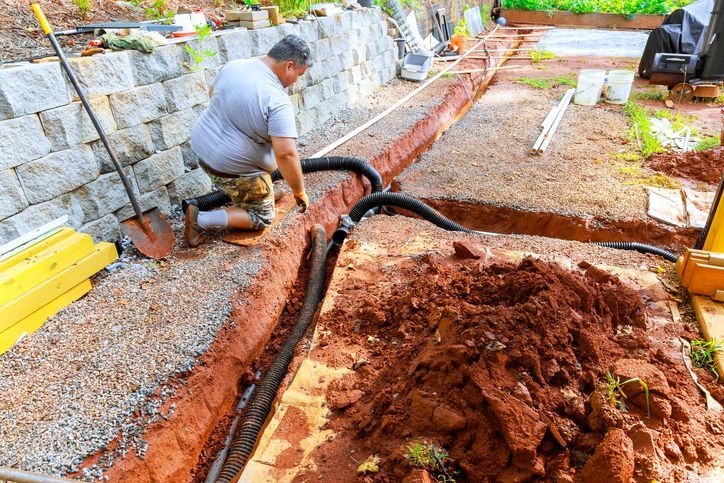
If water accumulates behind a wall, it can create hydrostatic pressure and contribute to soil movement, erosion, and other problems. Drainage stone, drainage pipe, grading, and other water-management measures may be incorporated depending on the project.
Geogrid reinforces soil; it does not replace drainage.
That distinction is important. A reinforced wall still needs a plan for managing water.
Why Excavation Matters for Reinforced Retaining Walls
One detail homeowners may not realize is how much space can be required behind a retaining wall.
If geogrid needs to extend several feet into the slope, enough soil must be excavated to create the reinforced zone. That can make site preparation significantly more involved than simply digging a narrow trench where the face of the wall will sit.
Access can also influence construction.
Equipment may need room to excavate the slope, move aggregate, prepare the base, install drainage materials, place backfill, and compact each layer correctly.
On Pittsburgh-area properties with steep hillsides, tight side yards, existing patios, fences, or nearby structures, excavation planning can become a major part of the project.
Homeowners considering handling this portion themselves can learn more in <a href="https://www.jbirdslandscapingllc.com/blog/should-i-do-my-own-excavation">Should I Do My Own Excavation?</a>.
What Happens When Reinforcement Is Overlooked?
Retaining wall problems rarely have one universal cause. Drainage, foundation preparation, soil conditions, compaction, wall design, and installation practices can all contribute.
However, when a wall requires reinforcement and the reinforcement system is inadequate for the application, the wall may be less capable of handling the forces acting on it.
Potential warning signs of retaining wall movement can include:
- Bulging sections
- Increasing lean
- Separation between blocks
- Uneven settlement
- Changes in the ground above the wall
- Persistent drainage problems
These symptoms don't automatically identify the underlying cause. A site evaluation is needed to understand what is actually happening.
For homeowners, the more important takeaway is that the visible wall is only one part of the construction. The preparation and materials hidden behind it matter just as much.
When Is Professional Retaining Wall Design Especially Important?
Every retaining wall deserves proper planning, but certain conditions make a thorough site assessment especially important.
These can include:
- Significant wall height
- Steep slopes
- Multiple retaining wall tiers
- Poor or variable soil conditions
- Drainage problems
- Driveways or other loads near the wall
- Structures near the retaining area
- Limited excavation access
Some retaining wall projects may also require permits, specific construction standards, or professional engineering based on wall height, loads, location, and local requirements.
Those questions should be addressed before construction begins rather than after a problem develops.
Building Retaining Walls for Pittsburgh Properties
Pittsburgh's hills are part of what makes the region distinctive, but they can create challenging conditions for landscaping and construction. Elevation changes, water runoff, soil conditions, and limited access all need to be considered when planning a retaining wall.
At J Bird's Landscaping, we look beyond the visible face of the wall.
Our retaining wall projects consider the complete system, including site preparation, excavation, drainage, backfill, grading, and reinforcement requirements. The goal is to build a wall that fits the property and addresses the conditions it is being asked to manage.
What Homeowners Should Remember About Geogrid
Geogrid is hidden when a retaining wall is finished, but on projects where reinforcement is required, it can be a critical component of the overall system.
The most important points to remember are:
- Geogrid reinforces the soil behind certain retaining walls.
- Reinforcement requirements depend on the wall and site conditions.
- Taller or more complex walls may require more extensive design considerations.
- Geogrid does not replace proper drainage, excavation, backfill, or base preparation.
- What is installed behind and beneath a retaining wall can be just as important as the materials you see.
If you're considering a retaining wall for a sloped property, erosion problem, or outdoor improvement, J Bird's Landscaping can evaluate the site and help determine the appropriate approach for your property. Contact J Bird's Landscaping to schedule a retaining wall consultation in the Pittsburgh area.
Author: Jay Nagy
Owner & Founded of J Bird's Landscaping. 18+ Years of experience in Pittsburgh lawn cutting, patio installation, trucking/hauling, French drain installation, and other landscape/design services.
More Posts from J Bird's Landscaping